MTA Desk Clock
Assistive IoT hardware designed to externalize time and reduce cognitive load for neurodivergent workflows.
Designed for Time Blindness
Time blindness is common in ADHD and other neurodivergent workflows. App-based reminders introduce just enough friction to break focus and delay action.
This project relocates time-critical transit data from a phone into a persistent physical object. The display runs continuously, presents information at a glance, and removes the need for last-minute decisions.
Core Architecture
Mechanical Design
The enclosure uses an interlocking elliptical lip with a 0.2 mm interference fit, leveraging PLA elasticity for a secure, screw-free assembly.
Three design iterations were conducted to reconcile printer tolerances with internal component clearances. The final form behaves more like a desk object than a gadget.
Authentic Visual Fidelity
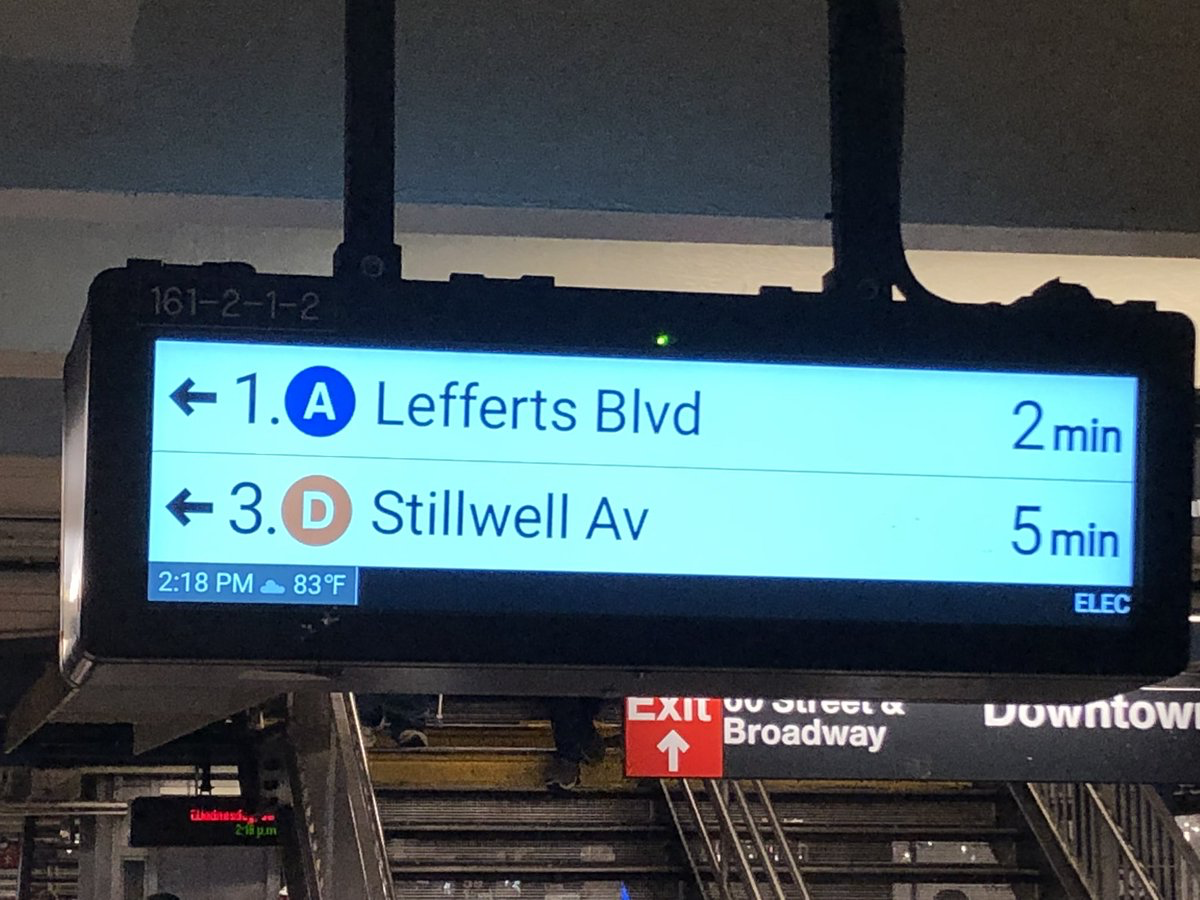
To maintain environmental consistency, I replicated the exact UI/UX language of the NYC subway countdown signs.
This involved mapping live JSON streams to a custom dot-matrix typography layout.
Systems Architecture: Logic and State Management
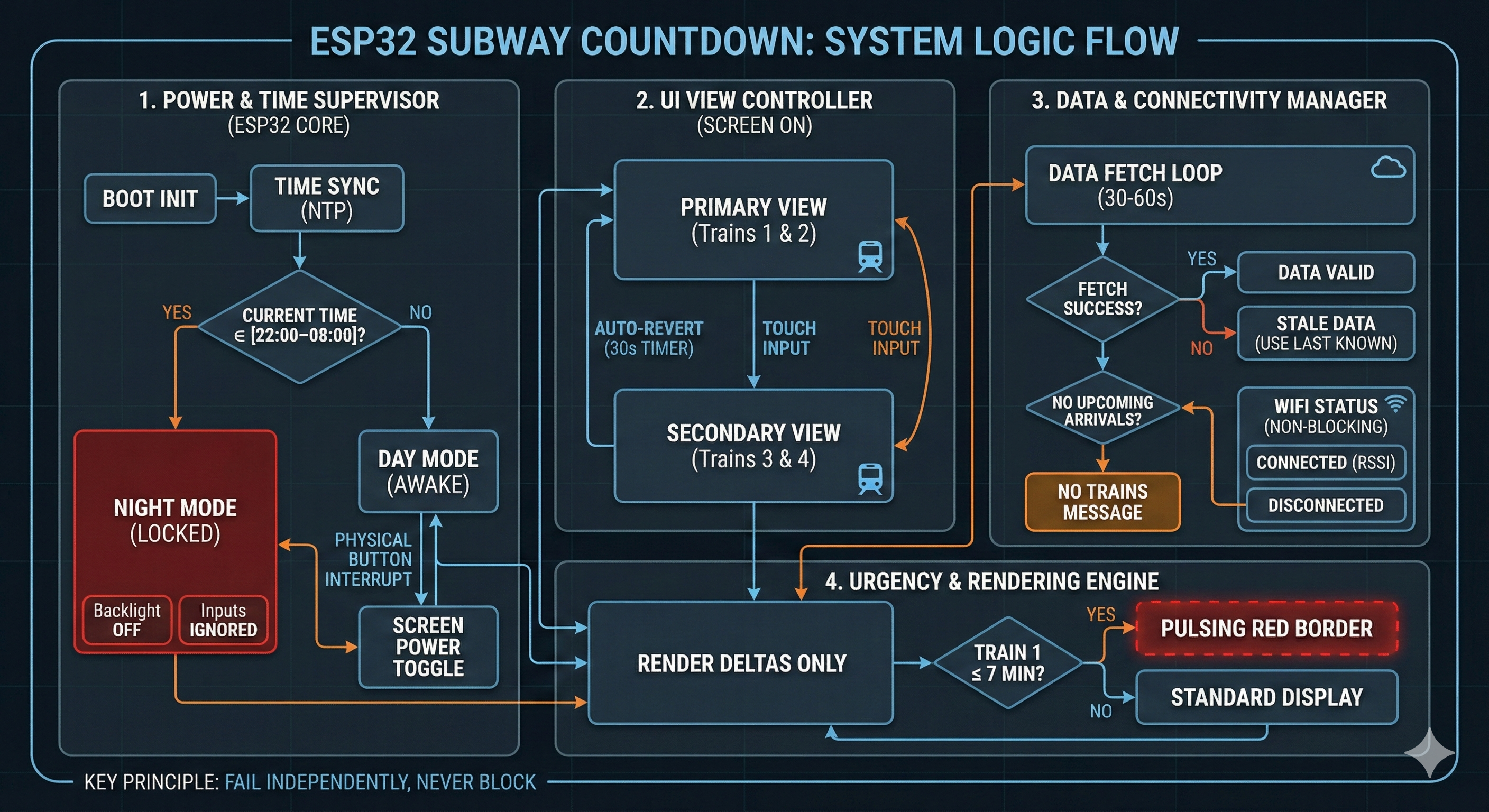
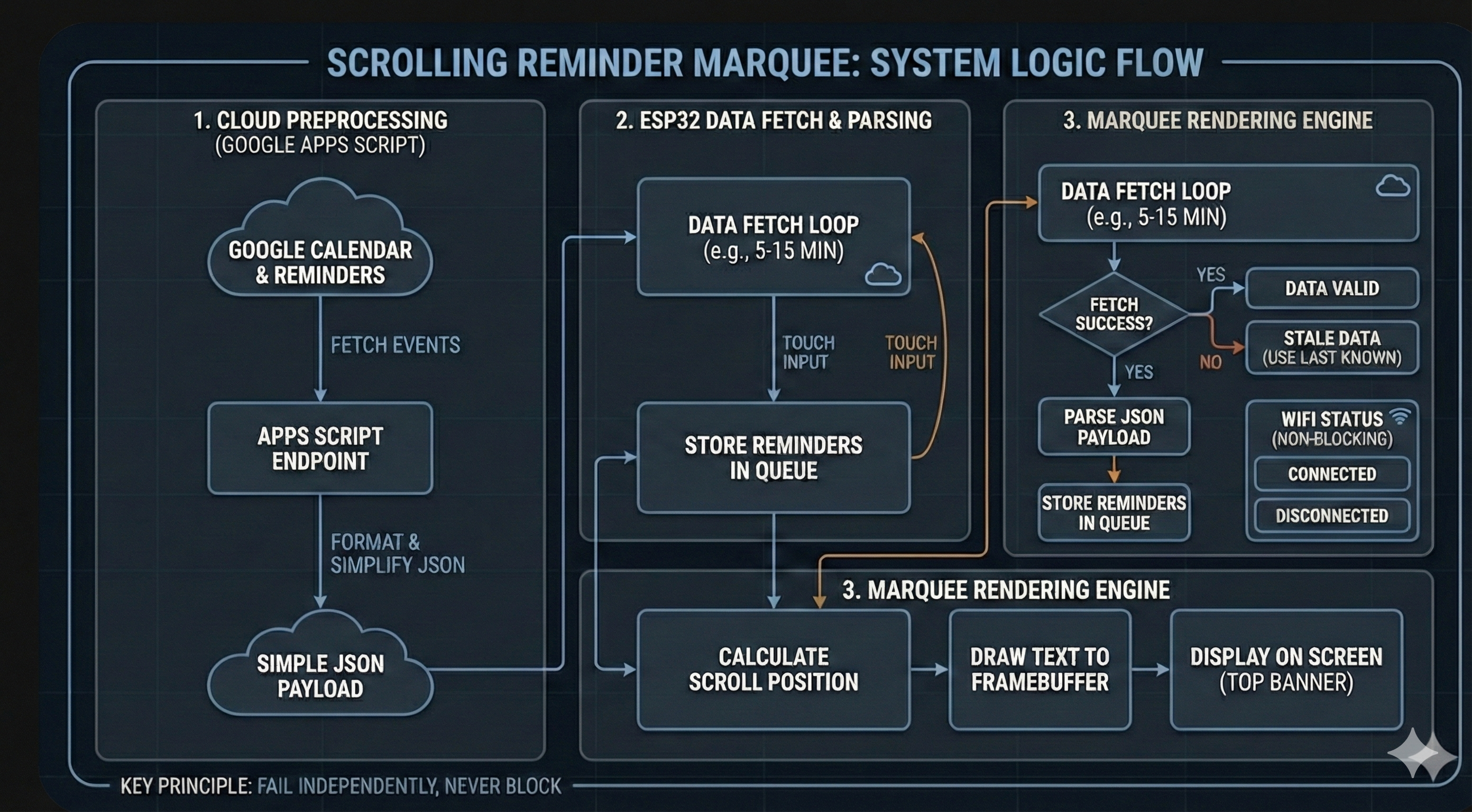
Firmware is written in C++ and structured as a strictly non-blocking state machine, with network operations decoupled from UI rendering and independent update loops for train telemetry and the scrolling reminder banner.
A visual urgency layer maps arrival time to interface state, while a time-driven marquee subsystem scrolls reminder and calendar data without interrupting primary countdown rendering. At T-7 minutes, the display enters a periodic red pulsing mode, empirically chosen as the optimal apartment departure threshold.